Building with teams. Solving real problems. Taking responsibility for the system, not just the model.
August 2026 – Present
Trek Health
San Mateo, CA
AI/ML Engineering Intern
Current
Cut error-resolution time by 70% for sales teams and customers by deploying a diagnostic skill that traces failed agent runs to priority-ranked root causes, using an evidence-bundle query and mandatory sub-agent drilldown.
Improved response time by 87% and reduced model calls by 38% by migrating the platform’s LangGraph orchestration to a REST API architecture, reducing infrastructure costs by 42%.
January 2025 – August 2026
Green AI Labs, University at Buffalo
Buffalo, NY
Research Intern
Built an LLM-grounded decision-support framework combining retrieved clinical knowledge with an ensemble offline RL, XGBoost, and TabNet policy over 874K ICU records.
Achieved 83% treatment accuracy in research evaluation, a 23 percentage-point gain over the BCQ baseline.
Built an admission-time risk-stratification module using HDBSCAN and UMAP over 27,799 patient stays, classifying cases into three validated mortality-risk tiers within minutes to flag high-risk cases for physician review.
January 2023 - June 2024
Innomatics Research Labs
Hyderabad, Telangana, India
Data Scientist
Validated a price-aggregation proof of concept for Amazon, BestBuy, and Flipkart, collecting 5,000+ listings through BeautifulSoup and Selenium with automated weekly refreshes and stress-testing under simulated production-scale conditions.
Normalized multi-source data into 12 structured attributes and built a distributed PySpark ETL pipeline into PostgreSQL, enabling unified CRUD and cross-brand price analytics.
Mentored 150+ learners across seven countries with a 4.7/5 satisfaction rating.
02 / SELECTED ENGINEERING
Ideas, built into systems.
A closer look at the agents, pipelines, and applications I’ve taken from a question to a working product.
01 / MULTI-AGENT RESEARCH2026
RETRIEVE. REASON. RESEARCH.
AGENTIC AI / FINANCIAL RESEARCH
StockPilot AIA research desk, orchestrated.
Built a supervisor-based multi-agent research system combining live stock data, news, and charts through hybrid retrieval, with responses under 10 seconds.
Added a prompt-injection guardrail and an 11.4% data-quality filter. Evaluated retrieval with RAGAS: 0.624 overall, 0.754 faithfulness, and answer relevancy improved from 0.673 to 0.736.
Extended analysis with seven-day Prophet forecasting and archived 3,800+ cold records to AWS S3 with DuckDB fallback. Airflow orchestrates PostgreSQL, MongoDB, and ChromaDB.
Built an autonomous pre-race intelligence pipeline that brings weather, practice telemetry, news, and a Gradient Boosting lap-time model into a single report in under two minutes across 24 rounds.
A LangGraph ReAct agent reasons over FastF1, Open-Meteo, and Tavily sources; MLflow records offline experiments and Prefect handles orchestration and retries.
Containerized the Streamlit application with Docker, deployed it on GCP Cloud Run, and automated deployment with GitHub Actions.
Created a weekday 8 AM or manual n8n workflow that collects LinkedIn jobs through Apify, normalizes fields, and removes duplicate URLs.
Claude Sonnet 4.6 scores fit and provides resume suggestions. The pipeline logs 21 fields per job into Google Sheets, routing scores of 70 or above into High Matches while retaining All Jobs.
Processes 100 jobs per run, turning job discovery into a repeatable, inspectable pipeline.
n8n
Claude API
Apify
Google Sheets
Automation
COMPARE. DISCOVER. CHOOSE.
DATA ENGINEERING / RECOMMENDATIONS
Laptrack
Built a robust ETL pipeline using PySpark to scrape, preprocess, and load extensive laptop data from Amazon, BestBuy, and Flipkart, ensuring seamless handling of diverse data formats. Dataset published on Kaggle.
Developed a feature-rich aggregator application using Flask (backend) and ReactJS (frontend), enabling users to compare laptop buying options across multiple platforms.
Implemented a content-based recommendation engine to suggest similar products, enhancing user engagement and providing tailored shopping experiences.
Designed and deployed machine learning models to predict laptop prices based on specifications and analyze pricing trends, integrating insights into an admin dashboard for informed decision-making.
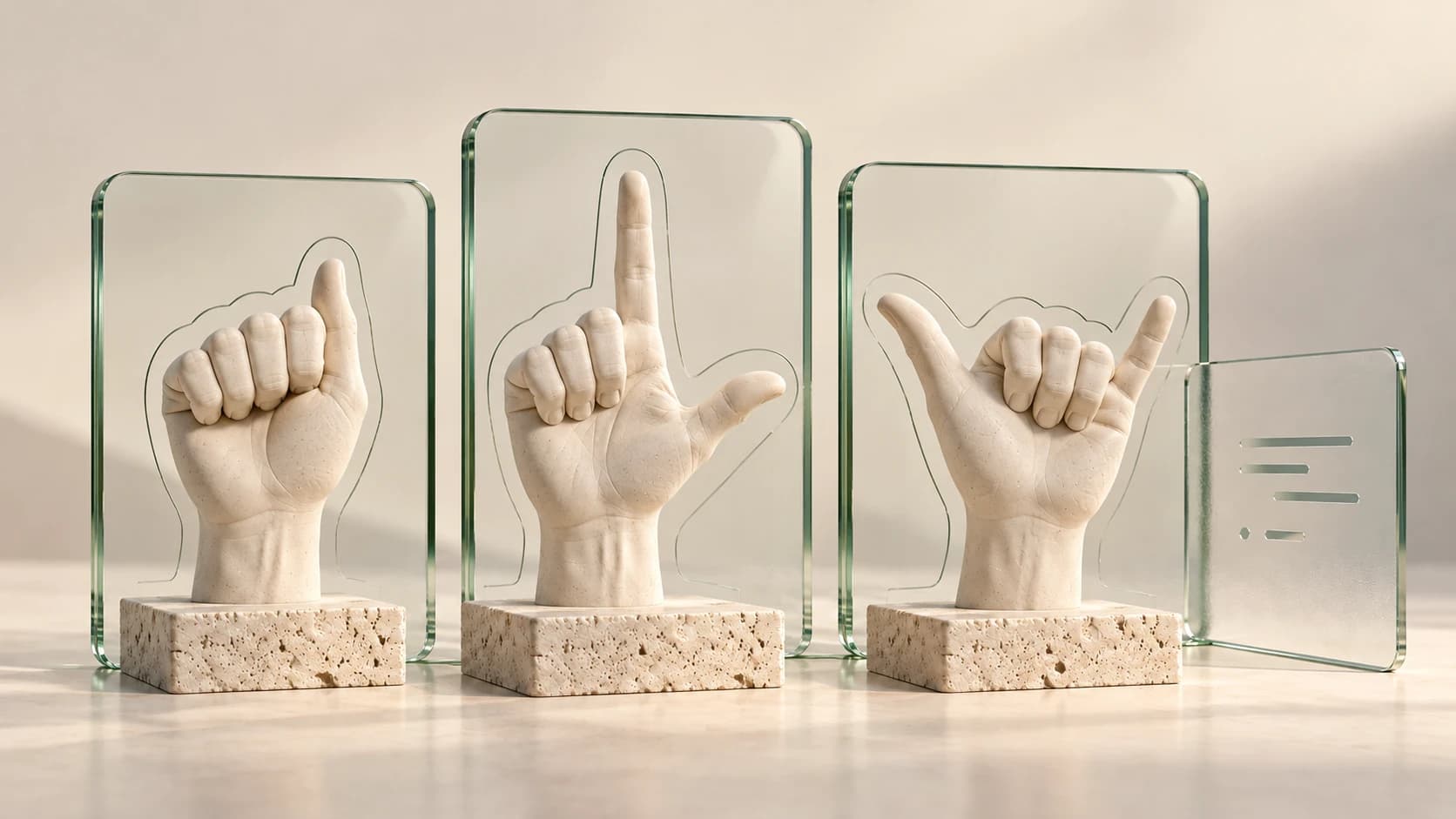
Built a real-time webcam detector for 10 custom hand signs using TensorFlow Object Detection and SSD MobileNet V2 FPNLite 320×320, connecting visual sign recognition to on-screen text.
Created a 300-image dataset by photographing personal examples of each sign and annotating bounding boxes with LabelImg. Used 240 images for training and 60 for testing.
Fine-tuned the pretrained detector for 10,000 training steps, then ran predictions on still images and live camera input with bounding boxes, sign labels, and confidence scores.
Organized data collection, training, evaluation, and inference in Jupyter notebooks and exported the frozen model. The custom vocabulary includes expressions such as “thank you,” “name,” “what,” “nice,” and “I love you.”
Interpretable clinical decisions and more sustainable machine learning. Work that asks what better could look like.
MAKING CLINICAL REASONING VISIBLE.
IEEE ICMLA 2025 / CONFERENCE PAPER
Interpretable sepsis treatment with offline reinforcement learning.
Developed an interpretable attention-based offline RL framework with clustering and LLM-generated rationale, evaluated on MIMIC-III and eICU cohorts.
The ensemble policy achieved 83% treatment accuracy over 874K ICU records. HDBSCAN and UMAP group 27,799 patient stays into three mortality-risk tiers.
Augmented underrepresented fluid and vasopressor examples with synthetic trajectories from diffusion models and a conditional VAE, addressing sparse intervention data during offline training.
Awarded third place at CSE Demo Days, University at Buffalo; the work developed into an IEEE ICMLA 2025 conference paper.
83%treatment accuracy in research evaluation 23 percentage points above the BCQ baseline
Kumar P., Saran V., Patel D., Kulkarni N., Vereshchaka A. Attention-Based Offline RL and Clustering for Interpretable Sepsis. IEEE ICMLA 2025.
With Punit Kumar (lead author), Divyesh Patel, and research collaborators at University at Buffalo.
MEASURE MORE THAN ACCURACY.
NY-BEST 2025 / POSTER PRESENTATION
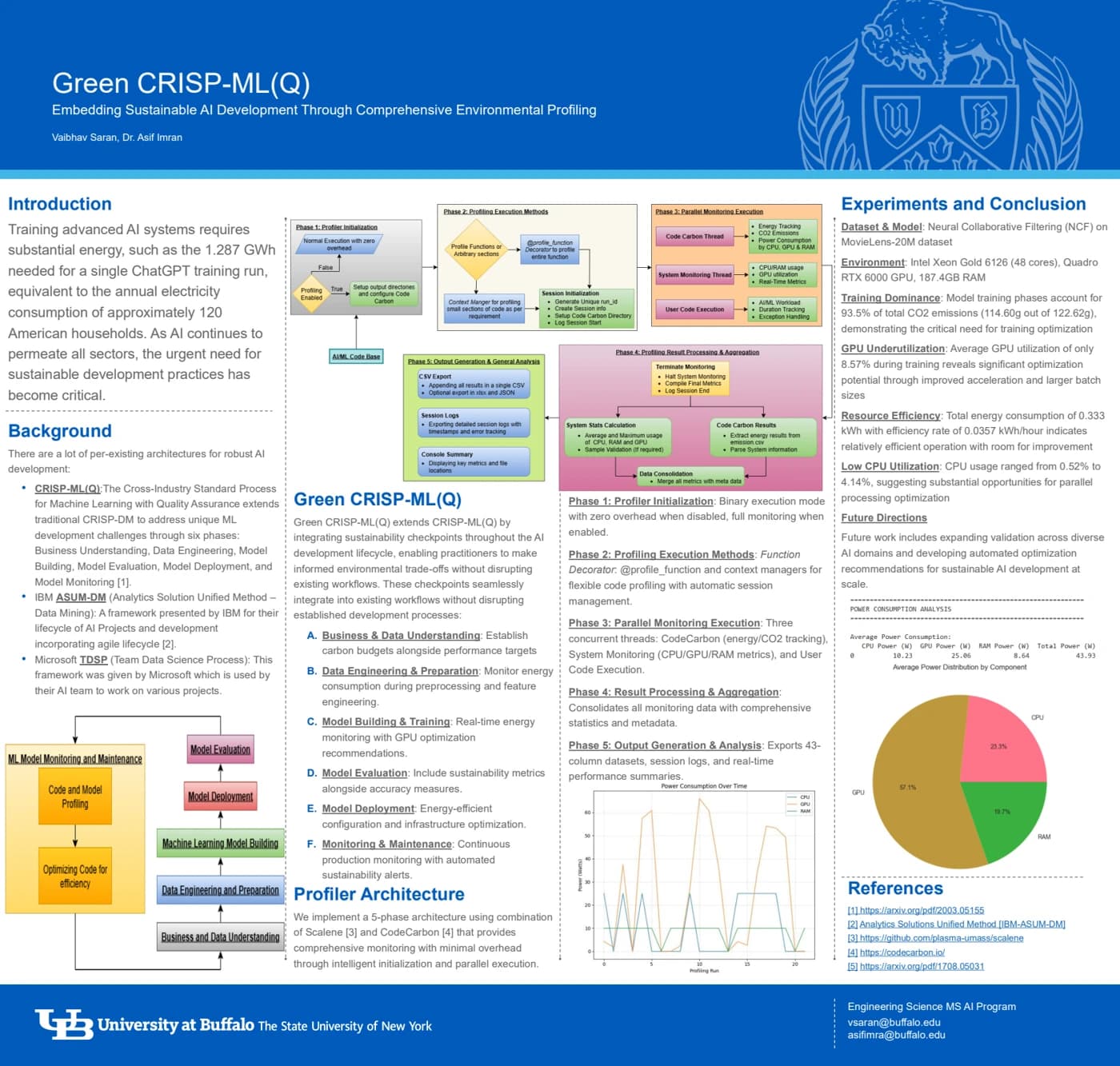
Green CRISP-ML(Q): a framework for sustainable machine learning.
Extends CRISP-ML(Q) with sustainability checkpoints across all six stages of the ML lifecycle, bringing carbon budgets, resource profiling, and environmental trade-offs alongside model quality.
Proof-of-concept evaluation: Neural Collaborative Filtering on MovieLens-20M, using an Intel Xeon Gold 6126 (48 cores), Quadro RTX 6000 GPU, and 187.4 GB RAM.
93.5%of measured CO₂ came from training
8.57%average GPU utilization during training
0.333kWh total experiment energy
Inside the profiler
A five-phase profiler combines Scalene and CodeCarbon: initialization, execution profiling, parallel monitoring, result aggregation, and output generation. Function decorators and context managers capture CPU, GPU, RAM, energy, and CO₂ measurements, exporting a 43-column dataset with session logs and performance summaries.
Business & data understanding
Data engineering
Model building & training
Model evaluation
Deployment
Monitoring & maintenance
These are observations from one NCF/MovieLens-20M experiment, not measured reductions or a general benchmark. Validation across more AI domains and automated optimization recommendations are future work.
Saran V., Imran A. Green CRISP-ML(Q): A Framework for Sustainable Machine Learning. Poster, NY-BEST 2025.
I like the space between “what if” and “it works.”
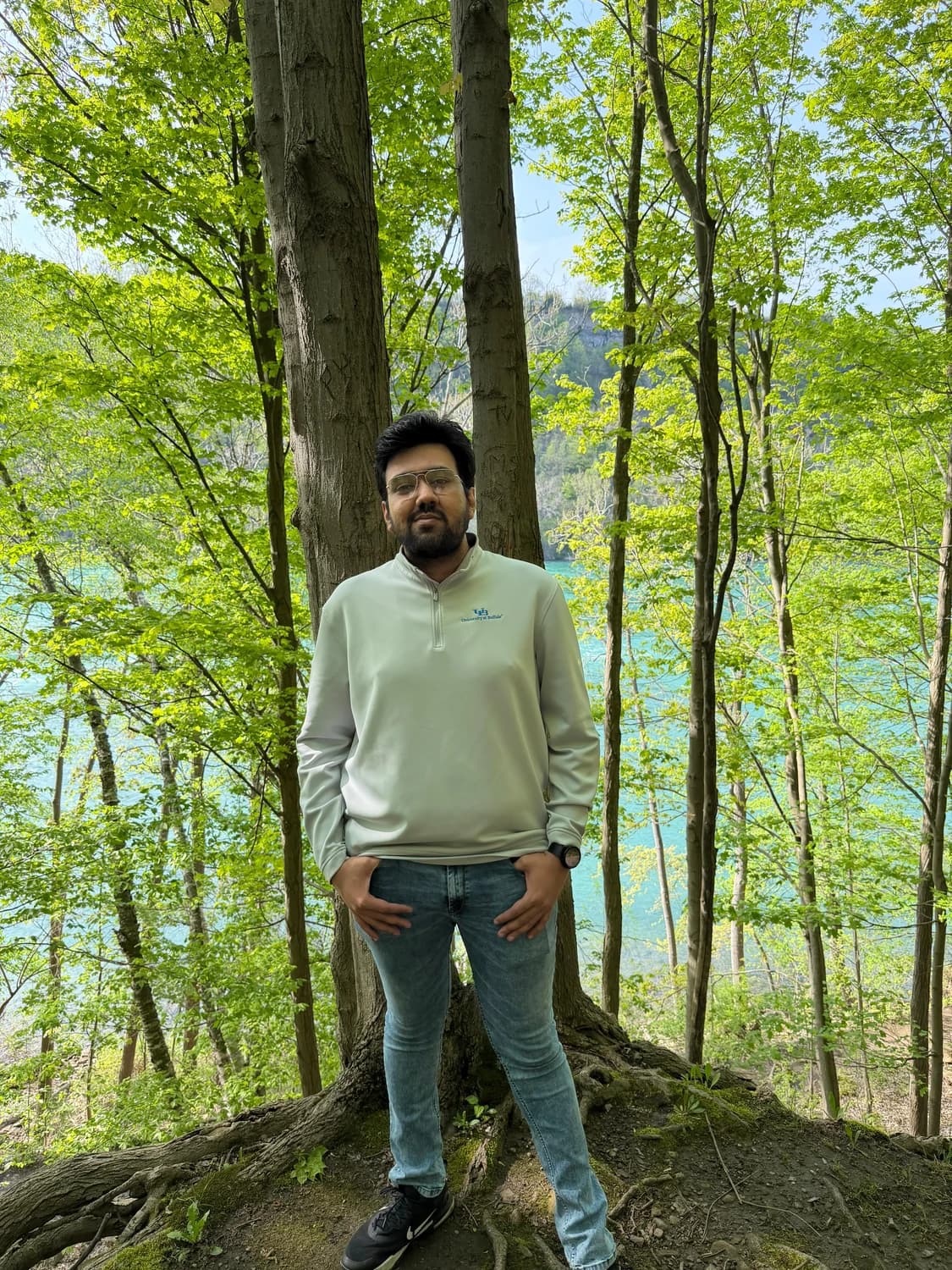
I’m an AI engineer with a master’s in Artificial Intelligence from the University at Buffalo. My work moves between agentic systems, data engineering, and applied ML research, including interpretable clinical reinforcement learning and sustainable ML.
I care about what happens around a model: the quality of its data, how it is evaluated, how its decisions can be understood, and what it takes to keep it running.
Outside the core projects, I’ve contributed to open source, mentored learners across seven countries, and continue building a public learning roadmap from Python fundamentals to generative AI.